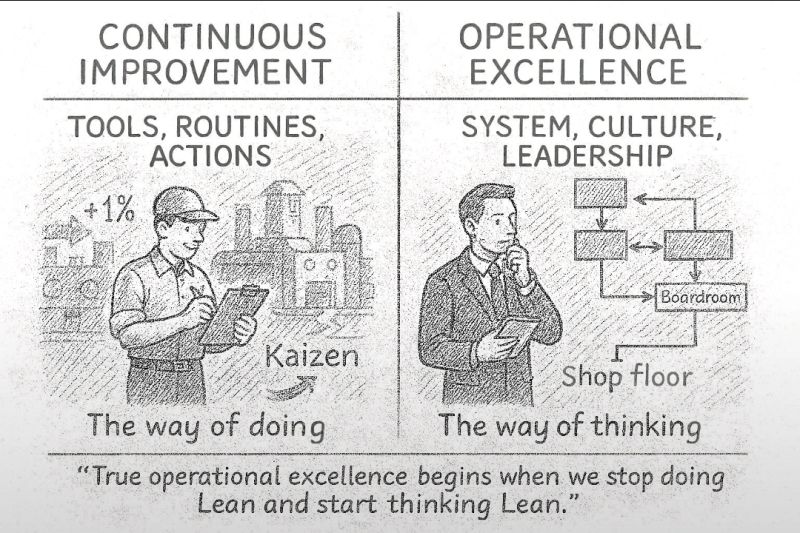
Continuous Improvement vs Operations Excellence: From the Way of Doing to the Way of Thinking
Sri Haryono, ST, MBA
Executive Board
15 December 2025
Berita dan Opini ALI Terbaru
Asosiasi Logistik Nilai Belum Ada Alasan Naikkan Ongkir dan Biaya Layanan
08 May 2026
KONTAN.CO.ID – JAKARTA. Asosiasi Logistik Indonesia (ALI) menilai, belum ada alasan kuat bagi platform digital maupun aplikator logistik untuk menaikkan tarif layanan dan ongkos kirim di tengah kondisi ekonomi yang masih menantang. Sebelumnya, Kementerian Usaha Mikro, Kecil, dan Menengah (UMKM) merespons keluhan pelaku usaha terkait kenaikan biaya logistik dan biaya layanan di platform e-commerce seperti Shopee dan TikTok Shop yang mulai berlaku sejak Mei 2026. Ketua Umum ALI Mahendra Rianto mengatakan, seluruh pelaku dalam ekosistem logistik dan perdagangan digital seharusnya mengedepankan prinsip bertahan bersama, bukan mengambil keuntungan sepihak di tengah tekanan ekonomi saat ini. “Dalam situasi yang lagi susah begini, jangan mengambil manfaat, mengambil untung. Jadi kalau kita mau sama-sama, ayo sama-sama. Jangan mau menang sendiri,” ujarnya kepada Kontan, Kamis (7/5/2026). Menurut Mahendra, faktor utama yang biasanya mendorong kenaikan biaya logistik adalah harga bahan bakar minyak (BBM). Namun, pemerintah saat ini masih mempertahankan harga BBM subsidi seperti biosolar dan pertalite, sehingga biaya operasional logistik relatif stabil. “Sebetulnya nggak ada poin untuk bisa menaikkan harga dalam situasi seperti ini. Karena titik utamanya yang menyebabkan biaya logistik naik adalah dari BBM,” katanya. Ia menjelaskan, komponen bahan bakar menyumbang sekitar 40% hingga 50% dari total biaya operasional transportasi logistik. Oleh karena itu, keputusan pemerintah mempertahankan harga BBM dinilai menjadi faktor penting dalam menjaga tarif logistik tetap stabil. “Solar yang sekarang kan Rp 6.800, itu kita minta dipertahankan pemerintah kabulkan. Kedua pertalite. Pertamax juga dipertahankan. Jadi cukup itu. Kita pun di jasa logistik, tarif-tarif nggak kita adjust, karena memang nggak naik bahan bakarnya,” ujarnya. Mahendra juga menyoroti kebijakan pemerintah terkait komisi aplikator yang dibatasi maksimal 8%. Menurut dia, jika kebijakan tersebut dijalankan dengan baik, maka beban biaya terhadap UMKM maupun konsumen dapat ditekan. “Kalau itu bisa kita jaga, apalagi komisi dari aplikator diturunin menjadi 8%, kan sebetulnya aman. Jadi UMKM berdagang tidak terbebani untuk beban angkut ke customer maupun ke aplikator,” katanya. ALI menilai kenaikan ongkos kirim berpotensi berdampak langsung terhadap daya beli masyarakat dan penjualan UMKM di platform digital. Jika ongkir meningkat, konsumen berpotensi menunda pembelian sehingga permintaan terhadap produk UMKM ikut tertekan. “Kalau nggak nanti orang mau beli barang tapi transportnya tinggi. Jadi orang nggak beli. Sehingga UMKM yang berdagang di situ pun juga jadi terdampak,” ujarnya. Di sisi lain, ALI juga mendorong percepatan transisi kendaraan logistik menuju electric vehicle (EV), khususnya untuk layanan last mile delivery. Langkah tersebut dinilai dapat menekan konsumsi BBM impor sekaligus menurunkan biaya operasional logistik dalam jangka panjang. Mahendra mengatakan pemerintah perlu mempercepat pembangunan ekosistem kendaraan listrik, mulai dari kebijakan, penyediaan stasiun pengisian kendaraan listrik umum (SPKLU), hingga dukungan pembiayaan murah bagi pelaku usaha logistik. “Pemerintah harus fasilitasi atau mencarikan dana murah. Karena ujung-ujungnya secara makro pemerintah akan mengurangi belanja BBM,” ujarnya. Ia menambahkan, kondisi geopolitik global saat ini menjadi momentum bagi Indonesia untuk mempercepat peralihan menuju energi terbarukan di sektor logistik. “Ini semacam awakening call atau alarm kepada kita untuk beralih kepada energi-energi terbarukan secepatnya,” pungkasnya. Sumber: https://industri.kontan.co.id/news/asosiasi-logistik-nilai-belum-ada-alasan-naikkan-ongkir-dan-biaya-layanan
👁️ 40 kali
Use Warehouse as Control Center Instead of Just Store Room
28 April 2026
Many companies treat the warehouse as nothing more than a storage facility, a place where goods sit until they are needed. Pallets come in, pallets go out. As long as there is space to store items, everything seems fine.In today’s competitive and data-driven business environment, that mindset is dangerously outdated. A warehouse is not a passive storage room. It is a control center of operations.1. Inventory TrackingInventory tracking is the systematic process of monitoring the movement, location, quantity, and status of inventory within the warehouse and across the supply chain. Without inventory tracking, a warehouse becomes a blind storage space. With it, the warehouse becomes an operational control tower. Effective tracking allows management to:- Optimize stock levels- Reduce carrying costs- Improve order fulfillment speed- Increase service reliability- Enable data-driven decision-making2. Record UpdateMany warehouses fail not because of theft or demand issues, but because records are not updated consistently. When records are outdated, management decisions become flawed. If the system says 500 units are available but actual stock is 300, the company risks overselling and disappointing customers.3. Record AccuracyInaccurate records create hidden losses:- Emergency purchases at higher prices- Expedited freight costs- Customer penalties- Lost contracts- Excess safety stock- Working capital inefficiencyInstead of relying only on annual stock takes, modern warehouses use cycle counting:- High-value items: counted weekly- Medium-value items: counted monthly- Low-value items: counted quarterlyThis prevents large discrepancies from accumulating.4. Tight ControlWarehouses contain high-value assets. Weak control invites:- Pilferage- Internal theft- Unauthorized access- Fraud- Stock manipulation- ShrinkageEven small losses accumulate significantly over time. Tight control protects not only inventory but also company reputation.Transforming the warehouse yields measurable financial benefits:1. Reduced Carrying Cost2. Lower Shrinkage3. Improved Cash Flow4. Increased Sales5. Lower Operational CostWarehouse transformation requires leadership commitment:- Clear vision- Investment in systems- Training programs- KPI-driven management- Zero tolerance for non-complianceTo transform warehouse operations:Step 1: Conduct Gap Assessment- Review accuracy level- Identify process weaknessesStep 2: Implement Inventory Tracking System- Barcode/RFID- WMS integrationStep 3: Establish Record Update Discipline- Define SOP- Train staff- Enforce complianceStep 4: Improve Record Accuracy- Launch cycle counting- Analyze discrepanciesStep 5: Strengthen Tight Control- Physical security- System access control- Audit trailsStep 6: Monitor KPIs- Accuracy %- Shrinkage %- Turnover ratio- Service level
👁️ 61 kali
Ketergantungan Transportasi Darat Tekan Logistik RI, Angkutan Laut Jadi Solusi?
17 April 2026
Bisnis.com, JAKARTA — Ketergantungan tinggi terhadap transportasi darat masih menjadi faktor utama tingginya biaya logistik nasional, sekaligus menghambat target pemerintah menurunkan rasio biaya logistik terhadap produk domestik bruto menjadi 12,5% pada 2029. Struktur logistik Indonesia saat ini masih didominasi moda darat dalam distribusi barang. Kondisi ini membuat biaya transportasi menjadi komponen terbesar dalam total biaya logistik. Berdasarkan data Badan Pusat Statistik (BPS) pada 2022, biaya transportasi mencapai 62% dari total biaya logistik nasional atau setara Rp1.721,8 triliun. Sementara itu, biaya pergudangan menyumbang 22% dan administrasi 16%. Dominasi tersebut turut berdampak pada tingginya biaya distribusi, terutama untuk jarak jauh dan volume besar. Selain itu, operasional angkutan darat juga menghadapi berbagai kendala, seperti kemacetan dan pembatasan operasional pada periode tertentu, termasuk Idulfitri. Kontribusi angkutan darat terhadap sistem logistik mencapai sekitar 30% dalam struktur tersebut, lebih tinggi dibandingkan dengan moda laut sebesar 12% dan udara 10%. Adapun moda lain seperti kereta api serta angkutan sungai, danau, dan penyeberangan masing-masing masih berada di kisaran 1%. Ketua Umum Asosiasi Logistik Indonesia Mahendra Rianto mengakui dominasi angkutan darat dalam arus distribusi barang masih sulit dihindari. Menurutnya, kondisi tersebut berkaitan dengan arah pembangunan infrastruktur yang selama ini lebih berfokus pada transportasi darat, terutama melalui pembangunan jalan tol. “Untuk penumpang iya, tetapi untuk logistik enggak. Kami malah dibebani biaya tol yang tinggi,” katanya ketika dihubungi, Selasa (14/4/2026). Ketergantungan pada moda darat juga berdampak pada tingginya konsumsi energi. Distribusi jarak jauh menggunakan truk meningkatkan penggunaan bahan bakar minyak bersubsidi dan menambah beban fiskal. Dalam konteks ini, penguatan angkutan laut dinilai menjadi salah satu opsi untuk menekan biaya sekaligus meningkatkan efisiensi energi. Mahendra menilai distribusi jarak jauh dapat dialihkan ke moda laut, baik melalui kontainer maupun kapal roll-on/roll-off (roro). Namun, ketiadaan regulasi yang jelas membuat pelaku usaha masih bergantung pada jalur darat. Dia menekankan perlunya kebijakan yang lebih tegas untuk mendorong peralihan moda, termasuk pengaturan distribusi jarak jauh dan realokasi subsidi energi. Menurutnya, subsidi bahan bakar akan lebih efektif jika diarahkan ke transportasi laut dibandingkan dengan kendaraan darat. “Kalau seribu truk naik kapal roro, yang bakar BBM hanya kapalnya,” lanjutnya. Di sisi lain, pengangkutan barang melalui moda laut menunjukkan tren peningkatan. Data BPS mencatat volume barang yang diangkut pada Januari–Desember 2025 mencapai 508,4 juta ton, naik 16,56% dibandingkan periode yang sama 2024. Capaian tersebut melampaui realisasi 2022 dan 2023 yang masing-masing sebesar 320,64 juta ton dan 351 juta ton. Integrasi Antarmoda Di tengah situasi ini, pemerintah mulai mendorong integrasi antarmoda sebagai bagian dari strategi efisiensi logistik. Direktur Jenderal Perhubungan Laut Kementerian Perhubungan Muhammad Masyhud menegaskan pendekatan yang ditempuh bukan menggantikan moda darat, melainkan mengoptimalkan peran angkutan laut. “Kami tidak pakai istilah shifting, tetapi berbagi saja. Jadi di darat tetap ada, kemudian di laut kita gunakan juga,” ujarnya. Salah satu skema yang disiapkan adalah optimalisasi kapal roro, termasuk opsi pengangkutan tanpa kepala truk. Model ini memungkinkan badan truk diangkut melalui laut tanpa menyertakan kepala kendaraan. Namun, pemanfaatan moda laut juga menghadapi tantangan, terutama terkait kondisi cuaca dan gelombang yang dinamis. Plt. Asisten Deputi Pengembangan Logistik Kemenko Perekonomian Ekko Harjanto menilai integrasi antara darat dan laut menjadi kunci, mengingat karakteristik Indonesia sebagai negara kepulauan. “Caranya ya tentunya kita harus melakukan efisiensi di angkutan darat, artinya dengan cara mengintegrasikan antarmoda angkutan. Paling pas adalah mengintegrasikan antara angkutan darat dan laut,” tuturnya. Pemerintah saat ini tengah menyusun rancangan peraturan presiden tentang penguatan logistik nasional yang mencakup penguatan infrastruktur, integrasi layanan, serta peningkatan daya saing sumber daya manusia. Namun, tanpa perubahan struktur yang lebih mendasar dan dukungan regulasi yang konkret, ketergantungan pada transportasi darat berisiko tetap menekan efisiensi logistik nasional. Sumber: https://ekonomi.bisnis.com/read/20260415/98/1966626/ketergantungan-transportasi-darat-tekan-logistik-ri-angkutan-laut-jadi-solusi#goog_rewarded.
👁️ 48 kali